

Specialized Racking Solutions to Revolutions Your Warehouse
When you need more than an off-the-shelf solution we can provide customised racking for your exact needs. Specialised racking solutions can maximise your storage density and totally transform your space when you’re working with hard-to-store items.
Storage can be particularly cumbersome if you’re handling unusual sizes and shapes such as hanging garments, tyres, cables or carpets. Storing up makes the most of your floor space, and in turn increases the volume you can store.
Pallet Racking Solutions
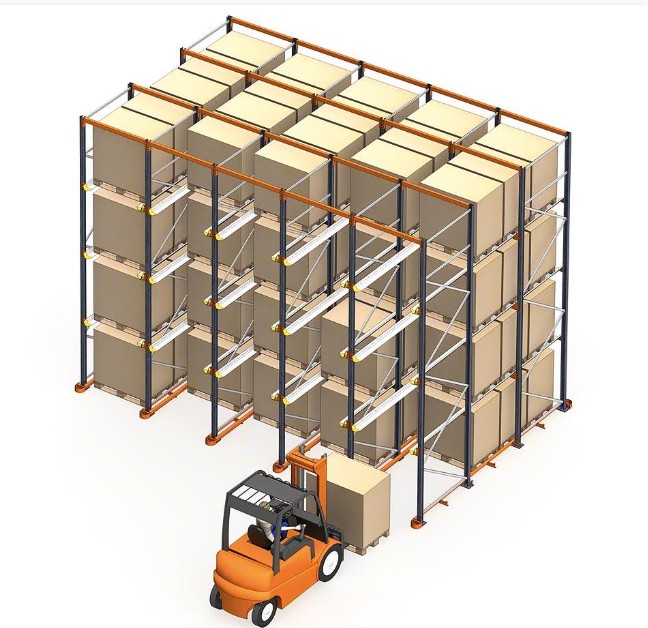
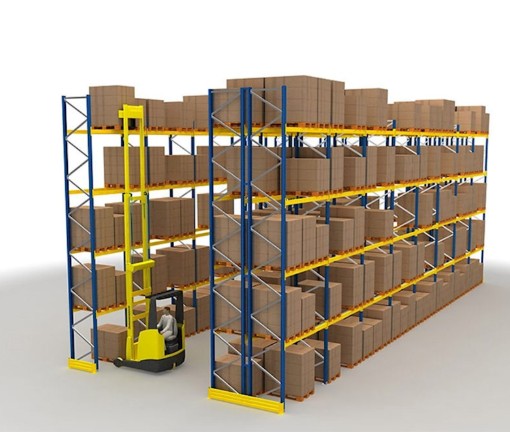
Selective Pallet Racking is the most common type of warehouse racking; it has the lowest pallet storage capacity; but is also the lowest cost per square metre of racking. However, in terms of high volume storage greater than 3000 pallets it’s often the most expensive solution. Selective Racking is a First in First out (FIFO) racking type
Selective Pallet Racking is the most common & popular type of warehouse racking; it has the lowest pallet storage capacity; but is also the lowest cost per square meter of racking.
Selective Pallet Racking provides direct access to every pallet in storage. For low turnover volume & high differentiation product lines this type of racking is a must.
Selective Racking access large range of Stock Keeping Units (SKU’s), no special truck requirements, cheapest type of racking (Per square meter).
Gravity Flow Racking
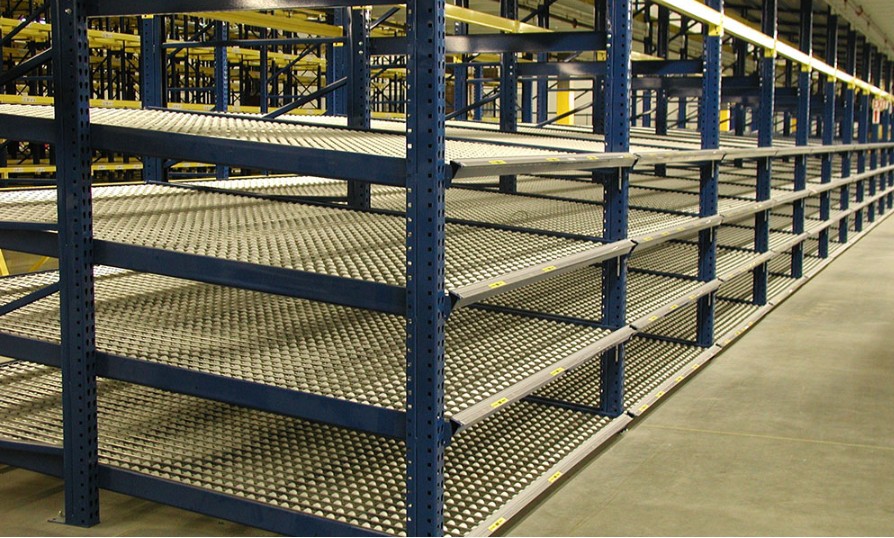
Gravity flow racking is a high-density dynamic storage system that increases efficiency by maintaining a First-In/First-Out product flow. To achieve this, products are stocked from one aisle and picked from the adjoining aisle through the use of a gravity-fed rolling system. Gravity flow racking is ideal for expiration date-sensitive inventory, high-volume consumer goods, warehouses and food distribution centres. It’s ideal for ambient and temperature controlled installations, including freezers.
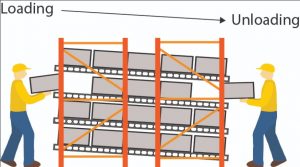 ‘Gravity Flow Racking’ is a storage system that relies on gravity flow to load, organize, and retrieve stored cartons or pallets within a warehouse.
Gravity flow racking uses space efficiently providing high density storage. The FIFO aspect of gravity flow racking and the natural flow of product makes it easier for workers to access the stock they seek, either by forklift or manual picking for smaller items.
Cantilever Racking
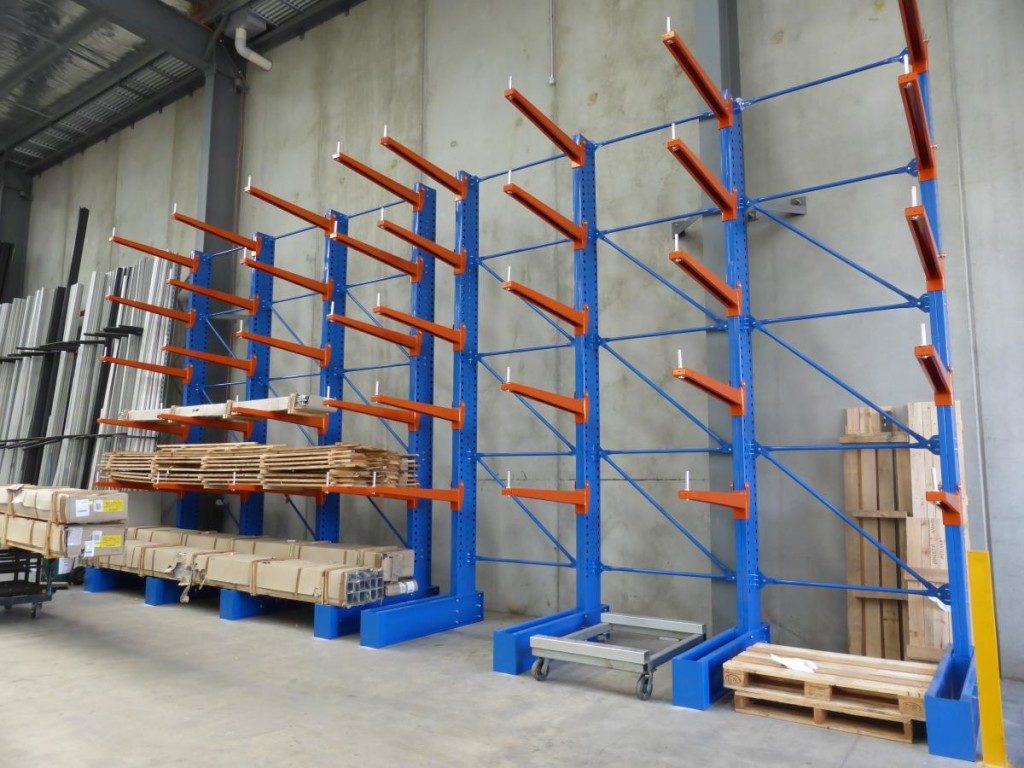
It is specifically designed to store long loads such as beams, profiles, pipes and timber. This rack enables loads to be handled by using lifting systems such as lift trucks, mobile cranes, stacker cranes, etc. These systems are chosen depending on the load to be stored (mainly weight and dimensions) or the height of the rack itself.
The system consists of columns with a vertical beam and one or two horizontal beams at the base to provide stability. A series of arms are attached on which the load is placed. These columns are made of hot-rolled metal beams at variable heights enabling to be fitted. Moreover, its design allows the loads to be fitted on one side of the structure only, or on both sides.
Advantages
- Easy-to-assemble. The parts are designed to allow the shelves to be assembled quickly and easily.
- Structure of great simplicity and strength.
- All the elements involved fit together easily and allow excellent mobility.
Cable Racking
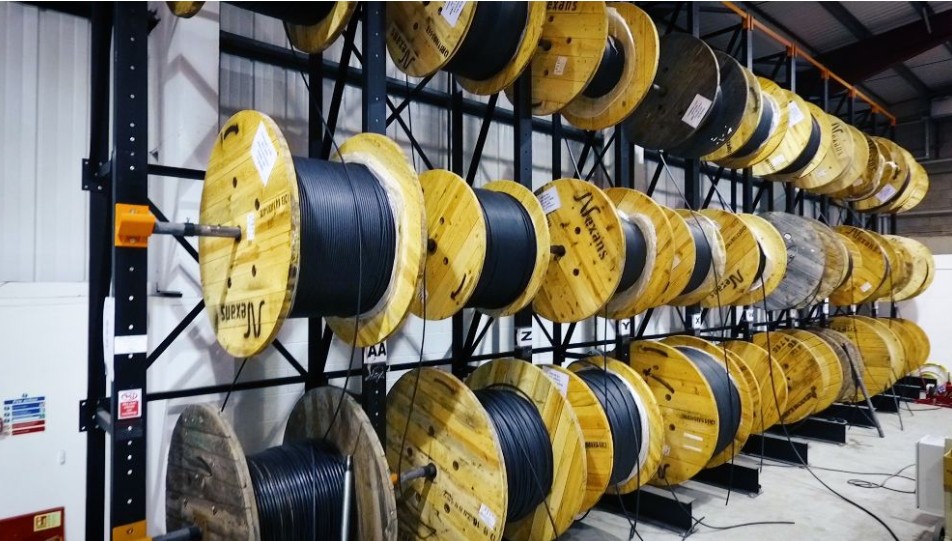
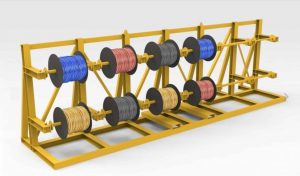
Stow’s cable reel system provides the perfect Solution for clear, space saving storage of all kinds of cable drums. We design the optimal configuration to store drums of different sizes.
Push Back Pallet Racking Systems
Push Back Pallet Racking Systems are designed for high-density, multiple-product storage, optimizing the use of your storage area while still providing excellent selectively. Using telescoping carriages, the pallet racking store pallets two, three, four or five deep, feeding and retrieving the pallets from one aisle. The pallet racks allow aisle access in a last-in/first-out rotation minimizing space requirements.
All of the pallets on each level, except the last, are placed on a set of trolleys that are pushed along the rolling rails. These rails are built on a slight incline, lower at the front, so that the pallets at the back move forward when the pallet closest to the aisles is removed.